
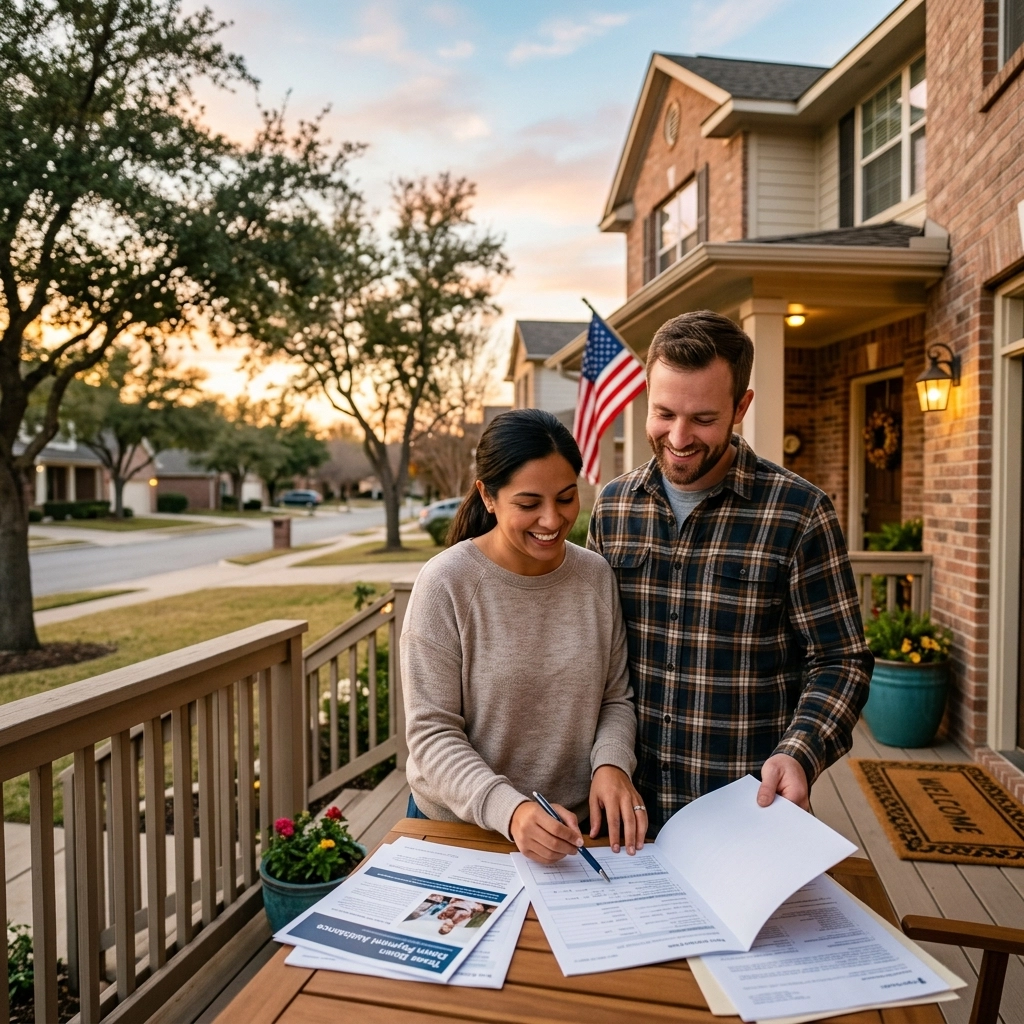
Listen, I get it. Buying your first home in Texas feels a bit like trying to solve a Rubik’s Cube while riding a mechanical bull. It’s loud, it’s fast, and everyone around you seems to have an opinion on how to do it "the right way."
One of the biggest hurdles I hear about every single day is the down payment. People think they need a mountain of cash sitting in a vault like Scrooge McDuck just to get a set of keys. That’s where Texas down payment assistance comes in to save the day.
But here’s the kicker: even though these programs are literal lifesavers, I see people mess them up all the time. As someone who has helped countless families navigate this (and as a certified Military Relocation Professional (MRP), I’ve seen my fair share of complex moves), I want to make sure you don't fall into the common traps.
Here are the 7 biggest mistakes I see buyers making with down payment assistance and, more importantly, how you can fix them.
1. Believing the "20% Down" Ghost Story
If I had a nickel for every time someone told me they were waiting until they saved 20% to buy a house, I’d be writing this from a private island.
This is the biggest myth in real estate. While 20% is great for avoiding private mortgage insurance (PMI), it is absolutely not a requirement. In fact, many Texas down payment assistance programs allow you to get into a home with as little as 3% down, or even zero if you’re a veteran or using specific grant programs.
The Fix: Look at the math. If you’re waiting to save $60,000 for a $300,000 home, but home prices are rising 5% a year, you’re losing money by waiting. I often point people toward the ultimate guide for 2025 programs to see what’s actually available right now.

2. Thinking You Aren't a "First-Time Buyer"
You might think that because you owned a condo back in 2015, you’re disqualified from these programs. Guess what? The "First-Time Homebuyer" label is way more flexible than you think.
In the eyes of the government and most Texas programs, a "first-time buyer" is generally defined as someone who has not owned a primary residence in the last three years.
The Fix: If you’ve been renting for the last 36 months, congratulations! You’re a "newbie" again in the eyes of the law. This opens the door to programs like My First Texas Home or Home Sweet Texas. Don't count yourself out until we look at the dates.
3. Ignoring the "Fine Print" on Forgiveness
Some down payment assistance is a straight-up grant (free money!). Others are "second liens." A second lien means the state or an organization is lending you the down payment, but you don't have to make monthly payments on it.
The mistake? Not knowing when that money has to be paid back. Some programs "forgive" the loan if you stay in the house for 3, 5, or 10 years. If you sell the house or refinance before that time is up, you might owe that money back in full.
The Fix: Ask the right questions. Is this a 3-year or 5-year forgivable loan? If you’re a military family and know a PCS move might happen in two years, a 5-year forgivable loan might not be your best bet. Being an MRP, I always help my military clients look at the "exit strategy" before they sign on the dotted line.
4. Skipping the Homebuyer Education Course
I know, I know. You’ve watched a thousand hours of HGTV. You think you know how it works. But almost every Texas down payment assistance program requires you to complete an approved homebuyer education course.
I’ve seen buyers wait until the last minute to do this, and it ends up delaying their closing.
The Fix: Do it early! Most of these courses are online, take about 4-8 hours, and actually teach you some useful stuff about budgeting and home maintenance. Plus, you usually get a certificate that’s valid for a year. Check out this step-by-step guide to see where this fits in your timeline.

5. Not All Lenders Are Created Equal
This is a big one. Just because a bank is "big" or has a cool commercial doesn't mean they know how to handle Texas-specific assistance programs.
I’ve seen people get pre-approved by a major national lender, only to be told three weeks into the contract that the lender "doesn't do" the specific grant the buyer was counting on. Talk about a heartbreaker.
The Fix: You need a lender who is "participating" and experienced with programs like TSAHC (Texas State Affordable Housing Corporation) or SETH. If your lender sounds confused when you mention these names, run. Find someone who speaks the language.
6. Forgetting About Closing Costs
Here is the "Ouch" moment for many buyers. You get your down payment assistance locked in, and you think you’re walking into closing with $0. Then, you see the "Closing Costs" line item.
Closing costs, things like title insurance, appraisal fees, and escrow deposits, usually run between 2% to 5% of the home’s purchase price. While some assistance programs can be used for both the down payment and closing costs, many only cover one or the other.
| Cost Item | Estimated Percentage | Who Pays? |
|---|---|---|
| Down Payment | 3% – 5% | You or Assistance Program |
| Closing Costs | 2% – 5% | You or Seller Credits |
| Appraisal/Inspection | Flat Fees ($500-$800) | Usually You Upfront |
The Fix: We can often negotiate for the seller to pay some or all of your closing costs. Especially in the current San Antonio market, we’re seeing more room for negotiation than we did a few years ago.
7. Waiting for the "Perfect" Market
I hear it all the time: "Frank, I'm going to wait until interest rates hit 4% again."
Here’s the reality check: when rates drop, everyone who was sitting on the sidelines jumps back in. That creates bidding wars, which drives home prices up. You might save $100 a month on your interest rate, but you’ll end up paying $30,000 more for the house.
The Fix: If you qualify for Texas down payment assistance today, you have a massive advantage. You have the funds to compete now while others are waiting. You can always refinance your rate later, but you can't "refinance" a high purchase price.

What This Means For You
The bottom line? Down payment assistance isn't a "scam" or "too good to be true." It’s a tool. And like any tool, you just need to know how to use it without hitting your thumb with the hammer.
If you’re a first-time buyer in Texas, especially if you’re looking in the San Antonio area, the opportunities are there. You just need a roadmap.
Your "Get-It-Done" Checklist:
- Check your credit score: Most DPA programs require a minimum of 620-640.
- Verify your income: These programs have limits based on your household size and county.
- Don't open new credit cards: Keep your finances "frozen" while you're applying.
- Gather your tax returns: You'll usually need the last two years ready to go.
- Talk to an expert: (Hey, that's me!)
Frequently Asked Questions (FAQ)
Q: Do I have to pay the money back?
A: It depends! Some are grants (no repayment), and some are "forgivable loans" that disappear after you live in the house for a certain number of years.
Q: Can I use this with a VA loan?
A: Absolutely. As an MRP, I love helping vets combine their VA benefits with Texas-specific programs to minimize their out-of-pocket costs even further.
Q: Is there a maximum house price?
A: Yes, each program has its own limits, but they are usually quite generous and keep up with current Texas home prices.
Ready to stop guessing and start packing? Let’s figure out which program fits your life and your budget. No pressure, no sales breath: just a solid plan to get you into a home.
Schedule a free 30-minute consultation with me here to get started!
