
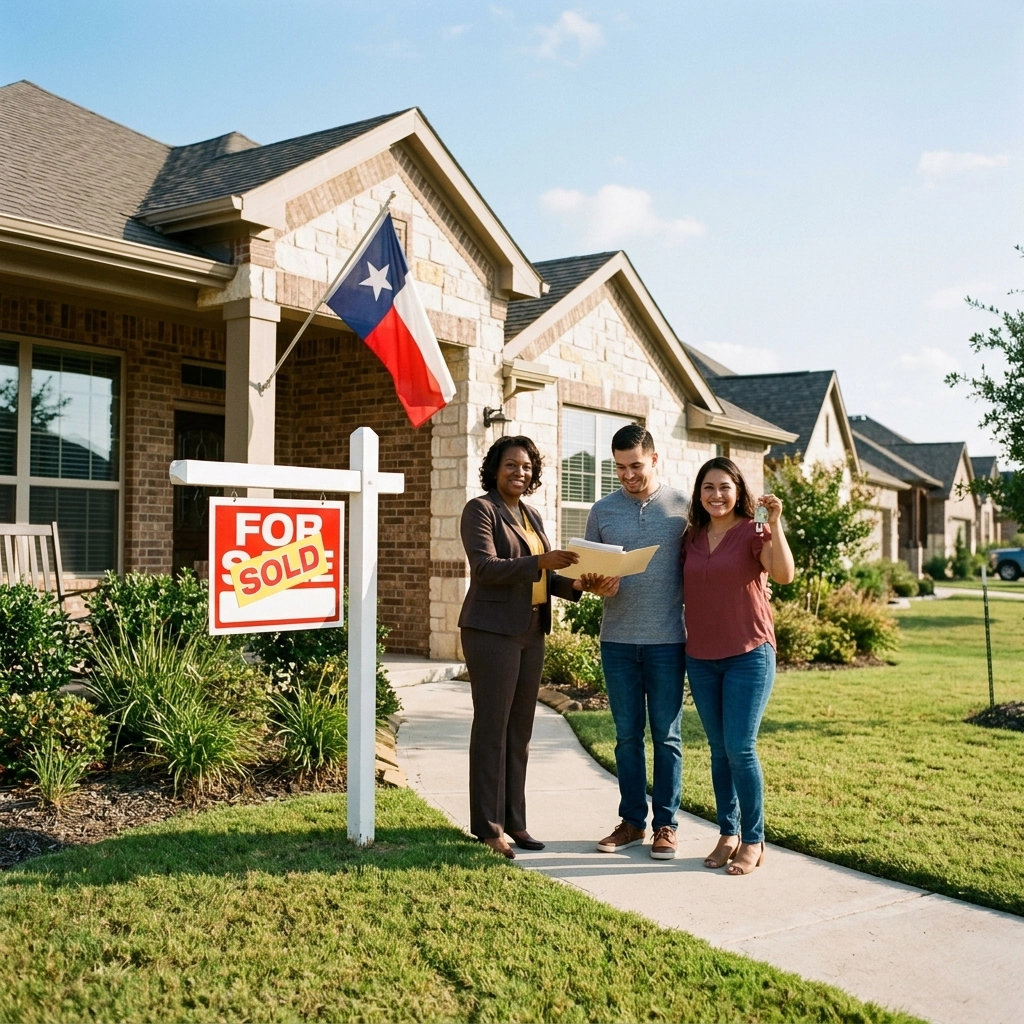
Let’s be real for a second: saving up for a house is tough. You’re out there working hard, paying rent that keeps climbing, and trying to tuck away a few bucks for a down payment. Meanwhile, the Texas housing market is moving fast. We are right in the middle of the "buying season," and if you’ve looked at the San Antonio real estate market lately, you know the competition is no joke.
But what if I told you there’s a way to get a massive head start? Imagine walking into a deal with an extra $18,000 to cover your down payment or closing costs. Sounds like a dream, right? Well, in Texas, it’s actually a reality for a lot of folks.
There are specific grants for first time home buyers in Texas that are designed to get you over the finish line. I’ve seen these programs change lives, but I’ve also seen people miss out because they didn't know the rules.
Here are 10 things you absolutely need to know about Texas down payment assistance and how to snag that $18,000 (or more) head start.
1. You Might Not Actually Need to Be a "First-Timer"
Wait, what? I know the headline says "first-time home buyer," but in the world of Texas grants, that definition is a bit flexible. Usually, a "first-time buyer" is anyone who hasn’t owned a primary residence in the last three years.
If you owned a home five years ago and have been renting since then, guess what? You’re a first-time buyer again in the eyes of the state! Also, if you are a veteran or you’re buying in certain "targeted" areas, that first-time buyer rule might be waived entirely.
2. The $18,000 Number Isn't Just a Fairytale
When we talk about Texas down payment assistance, the amounts vary. Some state programs offer a percentage of the loan (like 3%, 4%, or 5%). If you’re buying a $360,000 home: which is pretty common in our neck of the woods: a 5% grant puts exactly $18,000 in your pocket.
Some city-specific programs in places like San Antonio or Irving offer even more, sometimes up to $50,000 for those who qualify. The money is out there; you just need to know which door to knock on.

3. It’s Not Always a "Grant" (And That’s Okay)
In the industry, we use the word "grant" loosely. Realistically, these funds usually come in three flavors:
- True Grants: This is the holy grail. Gift money that never has to be paid back.
- Forgivable Loans: This is a second mortgage with 0% interest. If you stay in the house for a certain period (usually 3 to 5 years), the debt is wiped clean. You don't owe a dime.
- Deferred Loans: You don't make monthly payments on this money, but you do pay it back when you sell the house or refinance.
4. Your Credit Score Doesn't Have to Be Perfect
A lot of people think they need a 750 credit score to get help. That’s just not true. Most grants for first time home buyers in Texas require a minimum credit score of 620.
If you’re sitting at a 630 or 640, you are likely in the clear to apply for major programs like TSAHC (Texas State Affordable Housing Corporation). Don’t let a "decent-but-not-perfect" score stop you from trying.
5. Income Limits Are Higher Than You Think
These programs aren't just for people with very low incomes. They are designed for "workforce" Texans: teachers, nurses, office workers, and retail managers.
Income limits are based on the county where you’re buying. In many Texas counties, a family of four can earn well over $100,000 a year and still qualify for assistance. If you’ve been told you "make too much money," it’s time for a second opinion.
| Program Feature | Typical Requirement |
|---|---|
| Min. Credit Score | 620 |
| Max Income | Varies by County (Often $100k+) |
| Home Type | Single-family, Condo, Townhome |
| Occupancy | Must be your primary residence |
6. Calling All Heroes (Military & More)
If you are a teacher, police officer, firefighter, or veteran, Texas has a huge crush on you. Programs like "Homes for Texas Heroes" offer some of the best rates and grant amounts available.
As a certified Military Relocation Professional (MRP), I take a lot of pride in helping our vets and active-duty families navigate these waters. If you're using a VA loan, you can often combine it with state assistance to walk into a house with literally zero money out of pocket and even get your earnest money back at closing.

7. You Have to Take a Class (But It’s Easy!)
To get the money, the state wants to make sure you know how to own a home. You’ll usually be required to complete a homebuyer education course. Most of these are online, take a few hours, and cost a small fee. They cover everything from how to handle repairs to understanding your escrow account. It’s actually pretty helpful stuff.
Check out this step-by-step guide for first-time buyers to see where the class fits into your timeline.
8. Not Every Lender Can Give You These Grants
This is a big one. You can't just walk into any big national bank and ask for a Texas state grant. Lenders have to be approved by the state agencies (like TSAHC or TDHCA) to offer these programs.
If you’re working with a lender who says "those programs don't exist" or "they take too long to close," you’re talking to the wrong person. A pro who knows the Texas market will have these tools ready to go.
9. The Money Can Cover More Than Just the Down Payment
A common mistake is thinking you only need money for the down payment. You also have closing costs: things like title insurance, appraisals, and attorney fees. These can easily add another 2% to 3% to your bill.
The beauty of an $18,000 head start is that you can use those funds to cover the down payment and your closing costs. In many cases, it covers everything, meaning you just need to bring your toothbrush to closing.
10. The "Catch" is Usually Time
If there’s any downside to using Texas down payment assistance, it’s that it can add a little bit of paperwork to the process. In a fast-paced "buying season," you need to be prepared.
You can’t decide you want a grant the day before you sign the papers. You need to be pre-approved for the specific program from day one. That way, when you find the perfect house, your offer is just as strong as a cash buyer’s because your financing is already "grant-ready."

What This Means For You
Look, the Texas market isn't getting any cheaper. Waiting another year to save $18,000 on your own might mean the house you want costs $30,000 more by the time you're ready. Using a grant is like a shortcut. It lets you buy the house at today's price using tomorrow's savings.
Your "Grant-Ready" Checklist:
- Check your credit score (Aim for 620+).
- Gather your last 2 years of tax returns.
- Look up the income limits for your specific county.
- Find a lender approved for Texas state programs.
- Sign up for your homebuyer education course.
Frequently Asked Questions
Q: Do I have to pay the grant back if I sell the house?
A: It depends on the program. Some are "true grants" with no repayment. Others are "forgivable" if you live there for a set number of years (usually 3-5).
Q: Can I use this with a VA loan?
A: Absolutely! As an MRP, I see this all the time. Combining VA benefits with Texas grants is a power move.
Q: Is the interest rate higher if I take the grant?
A: Sometimes, yes. Usually, programs offer a trade-off: a slightly higher interest rate in exchange for the upfront cash. We can run the numbers to see which option saves you more over time. For more details, check out this ultimate guide to 2025 programs.
Ready to get that $18,000 head start?
Don't navigate this stuff alone. The programs are great, but the paperwork can be a headache if you don't have someone in your corner who knows the ropes. Whether you're a first-timer, a veteran, or a "hero" looking to move this summer, let's chat and find out exactly how much assistance you qualify for.
Schedule a free 30-minute consultation with Frank right here!
