
Welcome to the best "problem" you’ve ever had.
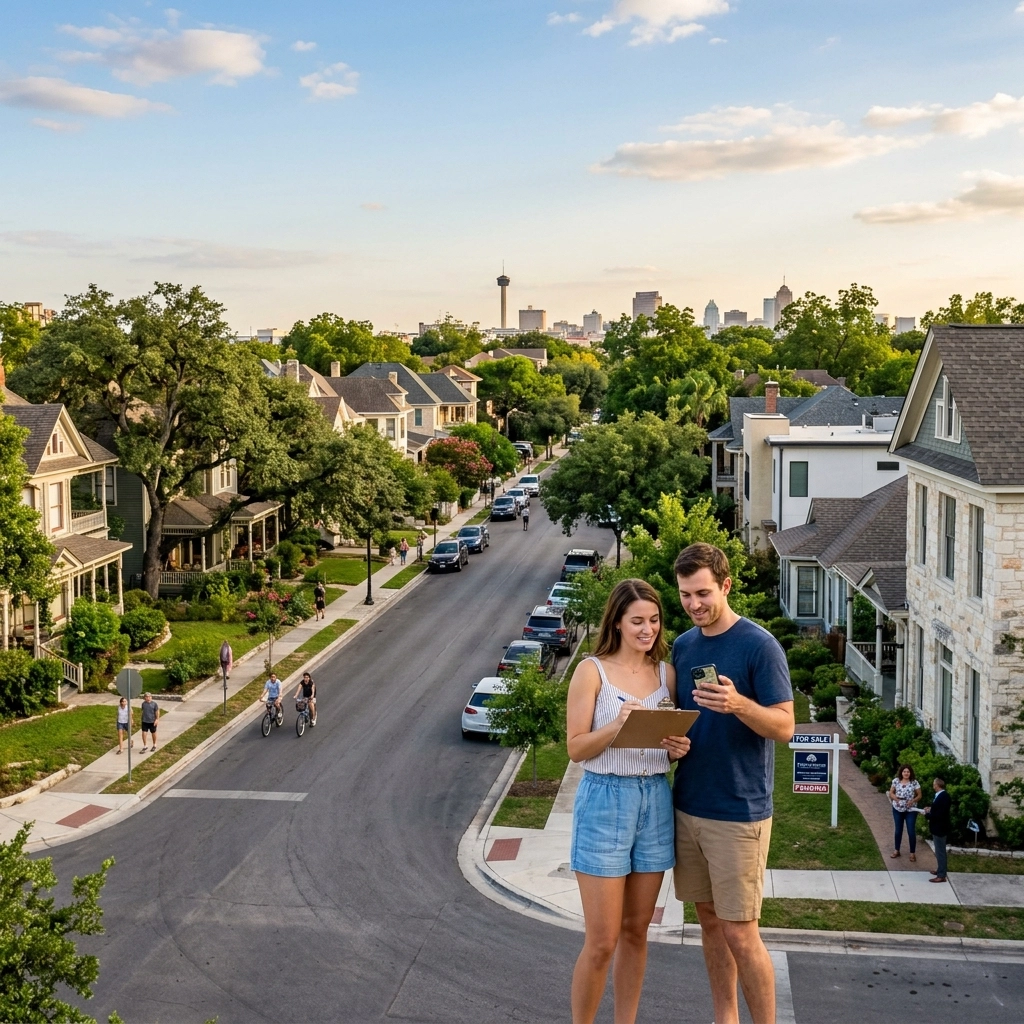
If you’ve been watching the San Antonio housing market lately, you’ve probably noticed something wild. For a few years, finding a house was like trying to find a parking spot at the Pearl on a Saturday morning, impossible and stressful. But as of May 2026, the tide has turned.
Inventory is sky-high. There are signs in yards everywhere. For a first-time buyer, this is incredible news, but it also leads to a new issue: Analysis Paralysis.
How do you choose between a charming mid-century bungalow in Alamo Heights, a shiny new build out near Lackland AFB, or a family-friendly spot in Stone Oak? When you have too many choices, it’s easy to freeze up.
I’m here to help you cut through the noise. As a local expert and a certified Military Relocation Professional (MRP), I’ve helped countless families navigate the unique "Military City USA" landscape. Whether you’re PCSing to Fort Sam Houston or just tired of paying your landlord’s mortgage, this guide will help you compare neighborhoods like a pro.
The State of the San Antonio Market in 2026
Before we dive into specific streets, let’s look at the big picture. We’ve seen a steady climb in available homes over the last year. If you look back at our San Antonio real estate market update from May 2025, you can see how much the landscape has shifted.
Today, buyers have more leverage than they’ve had in a decade. You can ask for repairs. You can ask for seller credits. But most importantly, you can be picky about your neighborhood.

Categorizing the "Big Three" San Antonio Vibes
To make your choice easier, I like to group our neighborhoods into three main "vibes." Most buyers naturally gravitate toward one of these.
1. The "Old Soul" (Established & Central)
Neighborhoods: Alamo Heights, Monte Vista, Olmos Park, Terrell Hills.
The Vibe: Massive oak trees, sidewalks, and homes with "character" (which is real estate speak for "the floors might creak, but look at that crown molding!").
What This Means For You: You’ll be close to the action. Commutes to downtown are short. However, you’ll likely pay more per square foot, and you might need a healthy "fix-it" fund for older plumbing.
2. The "Suburban Dream" (North & Northwest)
Neighborhoods: Stone Oak, Shavano Park, Helotes.
The Vibe: Gated communities, top-tier schools, and HEB Plus locations that are basically the size of small airports.
What This Means For You: It’s safe, clean, and holds its value incredibly well. The downside? The 1604 and I-10 traffic can be a nightmare if you work downtown. You’re trading a shorter commute for a bigger backyard and a community pool.
3. The "Growth Corridors" (West & Far West)
Neighborhoods: Castroville area, Potranco Road, Alamo Ranch.
The Vibe: New construction everywhere. You can still smell the fresh paint and sawdust.
What This Means For You: This is where inventory is highest. Builders are offering huge incentives right now. If you want a 2026 energy-efficient home with a warranty, this is your spot. Plus, it’s a quick hop to Lackland AFB, which makes it a favorite for my military clients.
The Great Neighborhood Comparison Table
Let's put these head-to-head so you can see the trade-offs clearly.
| Feature | Established (Central) | Suburban (North) | Growth (West/South) |
|---|---|---|---|
| Home Age | 50–100 years | 10–30 years | 0–5 years |
| Price per Sq Ft | $$$$ | $$$ | $$ |
| Inventory Levels | Moderate | High | Sky-High |
| Lot Size | Varies (often small) | Moderate | Large/New |
| Vibe | Historic/Eclectic | Family-Oriented | Master-Planned |
How to Choose: The "Five-S" Framework
With so many homes on the market, you need a system to filter them. I tell my clients to use the Five-S Framework:
1. Safety
San Antonio is a big city. While most areas are great, safety is a personal feeling. I always recommend checking local crime maps, but also, drive the neighborhood at 10:00 PM on a Tuesday. Is it quiet? Are people walking their dogs? Your gut feeling matters more than a spreadsheet.
2. Schools
Even if you don’t have kids, school districts drive home values. Areas served by NEISD or NISD generally see faster appreciation. High inventory means you don't have to settle for a "just okay" school zone. You can hold out for the best.
3. Schools of Fish (Amenities)
Okay, the pun is a stretch, but hear me out. What do you do for fun? If you love the Pearl, living in Stone Oak will feel like living in another state. If you love hiking at Government Canyon, living in Alamo Heights will be a chore. Pick a neighborhood that matches your Saturday morning routine.
4. Space
High inventory in 2026 means you can actually get that half-acre lot you’ve been dreaming of. If you need a home office and a guest room and a man-cave, focus your search on the Far West or North Central areas where houses are naturally larger.
5. Strategy (Investment Potential)
Are you buying this home for 30 years, or are you a military family who might move in three? If you’re likely to move, focus on "high-demand" rental areas like those near the Medical Center or the military bases.

Don’t Forget the "Military Factor"
If you are moving here on orders, your neighborhood choice is even more critical. As an MRP, I know that your commute to base isn't just about distance, it's about gate traffic.
For example, living in Alamo Ranch is great for Lackland, but if you’re stationed at Randolph AFB, you’ll want to look at Schertz or Cibolo. Because inventory is high right now, you have the rare chance to find a home that is both close to base and tucked away in a quiet, high-value neighborhood.
Check out our ultimate guide for 2025-2026 first-time buyers to see how you can use VA loans or state programs to snag these homes with little to nothing down.
Common Pitfalls to Avoid in a High-Inventory Market
When there are too many homes to look at, it’s easy to make these mistakes:
- Looking at too many houses in one day: After house number five, they all start to look the same. Limit yourself to three high-quality tours per outing.
- Waiting for the "Perfect" home: High inventory doesn't mean a house with zero flaws exists. It just means you have more options to find a "90% perfect" home.
- Ignoring the HOA: In newer San Antonio neighborhoods, HOAs can be strict (and expensive). Make sure you read the rules before you fall in love with a house that won't let you park your boat in the driveway.
Frequently Asked Questions (FAQ)
Q: Is it a bad sign that inventory is so high?
A: Not at all! It just means the market is balancing out. Sellers are no longer in a "take it or leave it" position, which gives you, the buyer, the power to negotiate better prices and repairs.
Q: Which neighborhood has the lowest property taxes?
A: Taxes vary by county and school district. Generally, areas outside the city limits (Bexar County) might have slightly lower rates, but you have to factor in the cost of services like trash and water.
Q: Can I still get a deal in a "fancy" neighborhood like Alamo Heights?
A: Yes. Because there is more competition for buyers' attention, even sellers in high-end areas are becoming more flexible. It’s all about having a good agent who knows how to spot a motivated seller.

Your 3-Step Roadmap to Choosing
- Define Your Top 3 "Must-Haves": Is it a 20-minute commute? A big yard? A specific school? Write them down and don't budge.
- Pick Two Zip Codes: Don't try to search the whole city. Pick two areas that fit your vibe and focus your energy there.
- Get Your Pre-Approval Ready: Even with high inventory, the best houses still go fast. Being ready to pull the trigger is the difference between winning and losing your dream home.
Let's Find Your Spot in San Antonio
Navigating a high-inventory market is exciting, but it can be overwhelming. You don't have to do it alone. Whether you're looking for a historic gem or a brand-new build near the base, I’ve got the local boots-on-the-ground experience to help you make a smart move.
Let’s grab 30 minutes to talk about your goals, your budget, and which San Antonio neighborhood actually fits your life.
