
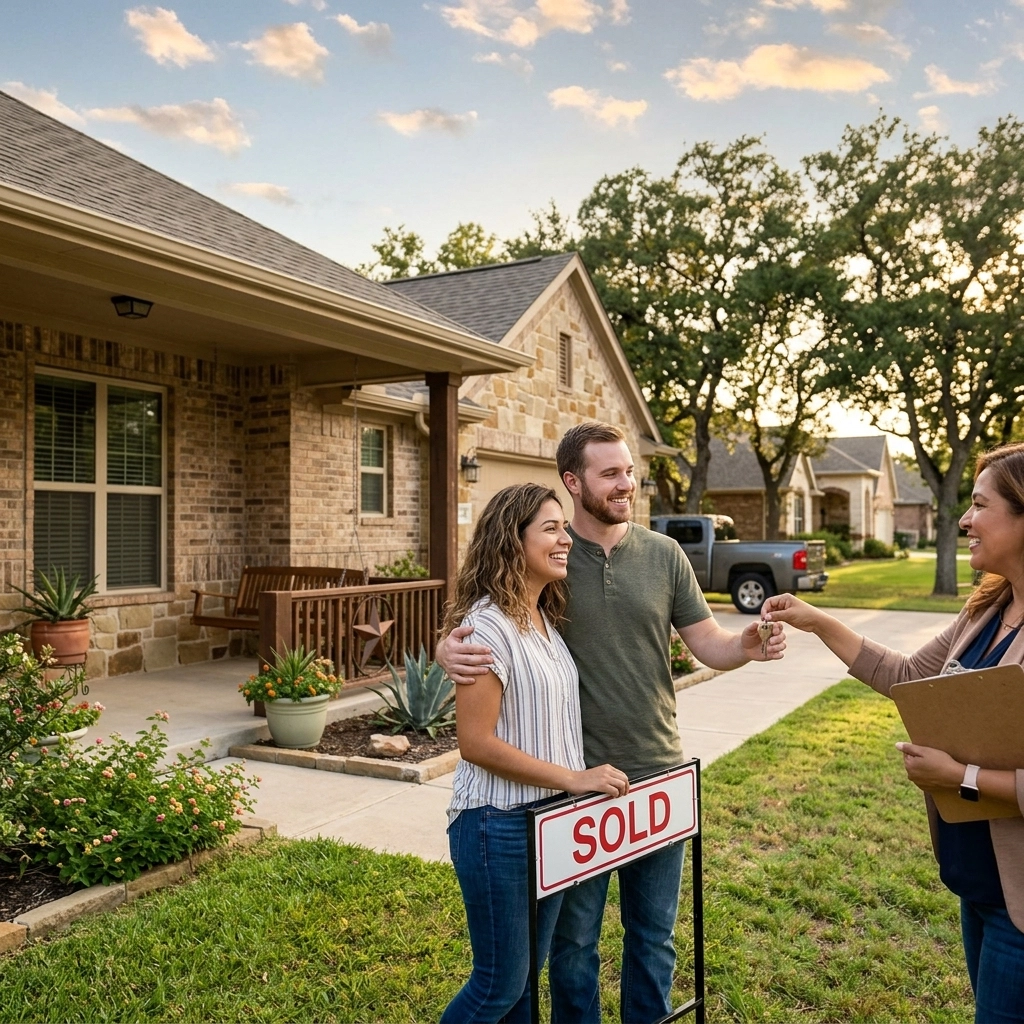
Hey there! If you’ve been scrolling through real estate apps lately and feeling like your bank account is a few zeros short of a down payment, take a deep breath. You’re not alone. I’ve talked to so many folks here in Texas who think they’re stuck renting forever because they don't have $50,000 sitting in a savings account.
Here is the truth: The "20% down payment" rule is basically a relic of the past. In today’s market, especially here in the Lone Star State, there are ways to get into a home with much less than you think. I’ve spent years helping families navigate this process, and I’m a certified Military Relocation Professional (MRP), so I’ve seen every financial situation under the sun, from VA loans with $0 down to state-specific grants that cover your closing costs.
If you’re wondering how to buy a house in texas without a mountain of cash, follow these five steps I’ve laid out for you.
Step 1: Face the "Credit Monster" Head-On
Before we talk about fancy houses or big backyards, we have to talk about your credit score. This is usually the part where people want to close the tab and go watch Netflix, but stick with me. Your credit score is the key that unlocks the door (literally).
To be a first time home buyer texas resident, you don't need a perfect 800 score. Most programs look for a minimum of 580 to 620.
What this means for you:
- If your score is 620+: You’re in a great spot for most Texas down payment assistance programs.
- If your score is 580-619: You can likely still get an FHA loan, though your interest rate might be a bit higher.
- If your score is below 580: Don’t panic. Start by paying down credit card balances to under 30% of their limit and making sure every single payment is on time from this moment forward.
I always tell my clients to check their report for errors. You’d be surprised how often a random "unpaid" medical bill from five years ago is dragging your score down. Fix those glitches now so you’re ready when the right house pops up.

Step 2: Kill the "20% Down" Myth
This is the biggest hurdle for most people. They think they need a massive pile of cash. Let’s look at the actual numbers for a typical first time home buyer texas scenario.
| Loan Type | Minimum Down Payment | Example ($300k House) |
|---|---|---|
| VA Loan (For Veterans/Military) | 0% | $0 |
| USDA Loan (Rural areas) | 0% | $0 |
| Conventional Loan | 3% | $9,000 |
| FHA Loan | 3.5% | $10,500 |
See? $9,000 sounds a lot more doable than $60,000 (which would be 20%).
But wait, it gets better. Texas is actually very "buyer-friendly" when it comes to help. You should look into texas down payment assistance programs like those offered by the Texas State Affordable Housing Corporation (TSAHC) or the Texas Department of Housing and Community Affairs (TDHCA). These programs can provide grants or low-interest second loans that cover your entire down payment and even some of your closing costs.
I’ve seen buyers walk away from the closing table with a check in their hand because their assistance covered more than their required costs. It’s not magic; it’s just knowing which programs to apply for. For more details on these, check out this ultimate guide for 2025.
Step 3: Get Pre-Approved (The "Golden Ticket")
In the Texas market, showing up to look at a house without a pre-approval letter is like trying to get into a concert without a ticket. The security (or in this case, the seller) isn't going to let you in.
A pre-approval is different from a "pre-qualification." A pre-qualification is just a conversation where you tell a lender what you make. A pre-approval is when the lender actually looks at your tax returns, pay stubs, and bank statements and says, "Yes, we will lend this person $X amount of money."
Why this matters:
- It sets your budget: You won't waste time looking at $400k homes if you’re approved for $325k.
- It shows you’re serious: Sellers won't even look at your offer without this letter.
- It uncovers "oopsies": If there’s an issue with your income or debt-to-income ratio, it’s better to find out now than when you’re three weeks into a contract.
If you’re a military family moving to the area, this step is even more vital. As an MRP, I know that your BAH (Basic Allowance for Housing) counts as income, and we need to make sure the lender calculates that correctly to maximize your buying power.

Step 4: Budget for "The Other Stuff"
When people ask me how to buy a house in texas, they often forget that the purchase price isn't the only number that matters. Texas doesn't have a state income tax, which is awesome, but the state makes up for it with property taxes.
You need to factor in:
- Property Taxes: These can vary wildly by county and school district.
- Homeowners Insurance: Between hail storms and high winds, insurance in Texas is a must-have, and it’s not always cheap.
- Closing Costs: Expect to pay 2-5% of the home's price in fees (unless you negotiate for the seller to pay them or use texas down payment assistance).
I always recommend that my clients keep a "rainy day" fund of at least $2,000–$3,000 after they move in. You don't want a leaky water heater in month two to ruin your homeownership experience. If you want to see how the market is shifting and what buyers are paying lately, have a look at the latest San Antonio market update.
Step 5: Find a Local Expert Who Speaks "Texan"
You need a partner in this. Buying a home is likely the biggest financial decision of your life. You don't want to wing it.
A good agent (like yours truly) does more than just open doors. I’m here to:
- Negotiate: In a competitive market, I help you craft an offer that stands out without overpaying.
- Inspect: I’ll help you find a home inspector who will crawl into the attic and under the foundation to make sure you aren't buying a lemon.
- Translate: Real estate contracts are full of "legalese." I’ll break it down into plain English so you know exactly what you’re signing.
Especially for my military brothers and sisters, having someone who understands the timeline of a PCS (Permanent Change of Station) is a game-changer. We don't have time for mistakes when your report date is looming. For a more detailed walkthrough of the timeline, you can check out this step-by-step guide for first-time buyers.

Frequently Asked Questions (FAQ)
Q: Do I really need 20% down?
A: Nope! As we discussed, you can go as low as 0% for VA/USDA or 3-3.5% for Conventional/FHA.
Q: Can I use down payment assistance if I’ve owned a home before?
A: Sometimes! Some programs are specifically for "first-time" buyers (defined as anyone who hasn't owned a home in the last 3 years), but other programs are available to repeat buyers in certain areas or professions (like teachers, police officers, or vets).
Q: What is "Earnest Money"?
A: This is a small deposit (usually 1% of the price) that you give the seller to show you’re serious about the deal. It goes toward your down payment at the end.
Q: How long does the process take?
A: From the time your offer is accepted, it usually takes 30 to 45 days to get the keys.
Your "No-Savings" Action Plan
If you’re ready to stop paying your landlord’s mortgage and start paying your own, here is your checklist:
- Check your credit score: Get it above 620 if possible.
- Gather your docs: Save your last two years of tax returns and last two months of pay stubs.
- Research TSAHC: See if you qualify for their down payment grants.
- Save "The Small Stuff": Aim to have $3,000–$5,000 in the bank for things like inspections, appraisals, and earnest money.
- Talk to a pro: Don't try to figure this out on your own.
Texas is a big place with a lot of opportunities. Whether you are looking in San Antonio, the surrounding Hill Country, or moving here on military orders, there is a path to homeownership for you. It just takes a bit of planning and the right team in your corner.
Ready to see what you qualify for? Let’s grab 30 minutes to chat about your specific situation and build a game plan that works for your budget.
