
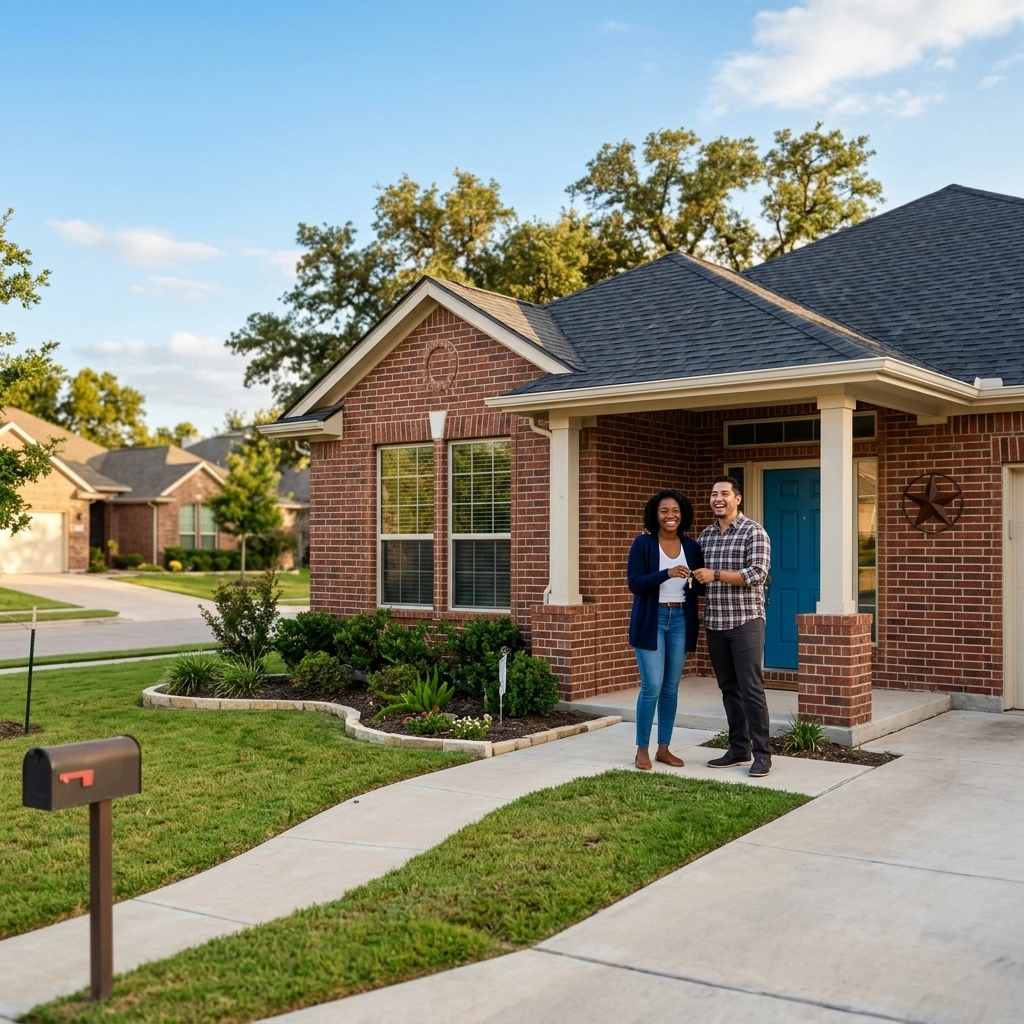
Buying your first home in the Lone Star State is an exciting milestone, but let’s be honest, it can also feel a little overwhelming. If you have been scrolling through listings in 2026 and wondering how to make the math work, you are not alone. Between down payments, interest rates, and closing costs, the finish line can sometimes feel like it’s moving further away.
The good news? Texas wants you to become a homeowner. The My First Texas Home program, managed by the Texas Department of Housing and Community Affairs (TDHCA), is specifically designed to help people just like you get over the hurdle of that initial cost.
Whether you are looking for a starter home in San Antonio or a cozy spot in the suburbs, this program is one of the most powerful tools in your belt. Let’s break down exactly how it works and how you can use it to move into your new place this year.
What Exactly is the "My First Texas Home" Program?
At its core, this program provides a 30-year fixed-rate mortgage combined with Down Payment Assistance (DPA) and help with closing costs.
The biggest barrier for most first-time buyers is usually the "cash to close." Even if you have a great job and a solid credit score, coming up with $15,000 or $20,000 all at once is tough. This program bridges that gap by offering assistance that can equal up to 5% of your total loan amount.
In 2026, the program continues to be a lifeline for buyers who want the stability of a fixed rate without draining every cent of their savings.
Why This Program is a Game Changer in 2026
While the market has seen plenty of shifts over the last couple of years, as we’ve tracked in our San Antonio market updates, the fundamentals of the My First Texas Home program remain a steady anchor for buyers. It offers:
- Lower Upfront Costs: You can use the assistance for your down payment or your closing costs.
- Predictable Payments: 30-year fixed rates mean your principal and interest won’t jump around.
- Tax Savings: You can often combine this with a Mortgage Credit Certificate (MCC) to save money on your federal taxes every year.

Step 1: Find a Participating Lender
You cannot just walk into any bank and ask for the My First Texas Home program. To access these specific funds and rates, you must work with a TDHCA-approved lender.
These lenders have been specifically trained on the program's rules. They know how to file the paperwork correctly and how to ensure your assistance funds are ready when you head to the closing table.
Pro Tip: Don't just pick the first lender you see. Talk to someone who understands the local Texas market. If you are a military family or a veteran looking to use this program, it is especially important to work with a professional who knows the ropes. Frank Duran is a certified Military Relocation Professional (MRP), meaning he understands the unique needs of those who serve and can help navigate how these programs interact with VA benefits.
Step 2: Complete Homebuyer Education
Before you can get the keys, you have to hit the books, just a little bit! Every borrower using the My First Texas Home program is required to complete an approved homebuyer education course.
What This Means For You:
Don't look at this as just another chore. These courses are designed to help you succeed as a homeowner. You’ll learn about:
- Budgeting for repairs and maintenance.
- Understanding the fine print of your mortgage.
- How to protect your investment over the long haul.
Most of these courses can be taken online and are very affordable. You’ll receive a certificate at the end, which your lender will need for your loan file. It’s a small investment of time that can save you thousands of dollars in "rookie mistakes" later on.
Step 3: Determine Your Down Payment Assistance (DPA) Needs
This is where the program gets really exciting. You can choose how much assistance you need. Typically, the program offers options for 2%, 3%, 4%, or 5% of the loan amount.
How it works:
The assistance usually comes in the form of a "second lien." In many cases, this is a 0% interest, no-monthly-payment loan that is deferred. This means you don't have to pay it back every month. Instead, it is usually paid back only when you sell the home, refinance the mortgage, or pay off the main loan.
Example Scenario:
If you are buying a home for $300,000 and you opt for the 5% assistance, that is $15,000 available to cover your down payment and closing costs. For many first-time buyers, that is the difference between buying now and waiting another three years to save up.

Step 4: Check Income and Purchase Price Limits
Because this program is designed to help low-to-moderate-income families, there are some "guardrails" in place. These limits change depending on which county you are buying in and how many people live in your household.
| Factor | What to Watch For |
|---|---|
| Household Income | Total income for everyone living in the house must stay below the county limit. |
| Purchase Price | The home itself cannot cost more than the program's maximum for that area. |
| Credit Score | Generally, you'll need a minimum score of 640. |
| First-Time Status | You generally haven't owned a home in the last 3 years (Exceptions apply for Veterans!). |
It is important to check the 2026 limits for your specific area. A home in a high-cost area might have higher limits than a rural county. Your lender can quickly pull these numbers for you, or you can look back at our Ultimate Guide for Texas Programs for a deeper look at how these criteria are structured.

Step 5: Start the Mortgage Application
Once you have your educator certificate in hand and you know you meet the income requirements, it is time to get to work! Starting the application involves gathering your "financial life" into one folder.
What you’ll likely need:
- Proof of Income: W-2s from the last two years and your most recent pay stubs.
- Bank Statements: Usually the last two months of all accounts.
- Tax Returns: Your federal filings from the last two years.
- Identification: Government-issued ID.
Once you submit your application, your lender will give you a Pre-Approval Letter. This letter is your "golden ticket." In the competitive 2026 market, sellers won’t even look at your offer unless they know you are backed by a solid program like My First Texas Home.
Is the Process Manageable? Absolutely.
We know that reading about "liens," "DTI ratios," and "TDHCA requirements" can make your head spin. But here is the secret: you don't have to be an expert in any of this.
Your job is to find the home you love. Our job is to guide you through the paperwork and the "boring stuff" to make sure you get there. If you want a more general overview of the whole journey, check out our step-by-step guide for first-time buyers.
The My First Texas Home program is a proven pathway to ownership. It has helped thousands of Texans stop paying rent and start building equity, and 2026 is a fantastic time to join them.

Frequently Asked Questions (FAQ)
Can I use this program if I am a Veteran?
Yes! In fact, the "first-time homebuyer" requirement is often waived for qualified Veterans. Also, remember that Frank is a certified Military Relocation Professional (MRP) and can help you maximize your benefits.
Do I ever have to pay back the assistance?
In most cases, yes. The assistance is usually a second loan that is paid back when you sell or refinance. However, there are some "forgivable" options where the debt disappears if you stay in the home for a certain number of years.
What kind of homes can I buy?
You can use this for single-family homes, townhomes, and even some condos or duplexes, as long as they are located in Texas and will be your primary residence.
Is my credit score high enough?
Most lenders for this program require a minimum score of 640. If you are close but not quite there, don't give up! Sometimes a few small changes to your credit profile can bump you up into the qualifying range.
Your 2026 Homeownership Checklist
- Check your credit score: Aim for 640 or higher.
- Gather your docs: Pay stubs, W-2s, and bank statements.
- Find a participating lender: Ask specifically about the TDHCA programs.
- Take the course: Sign up for your homebuyer education class.
- Define your budget: Know your monthly limit, not just your max loan amount.
- Call a pro: Get a team in your corner who knows the Texas market inside and out.
Ready to start your journey with the My First Texas Home program? Schedule a free 30-minute consultation with Frank here: https://calendly.com/frank-1sthometexas/30min
